
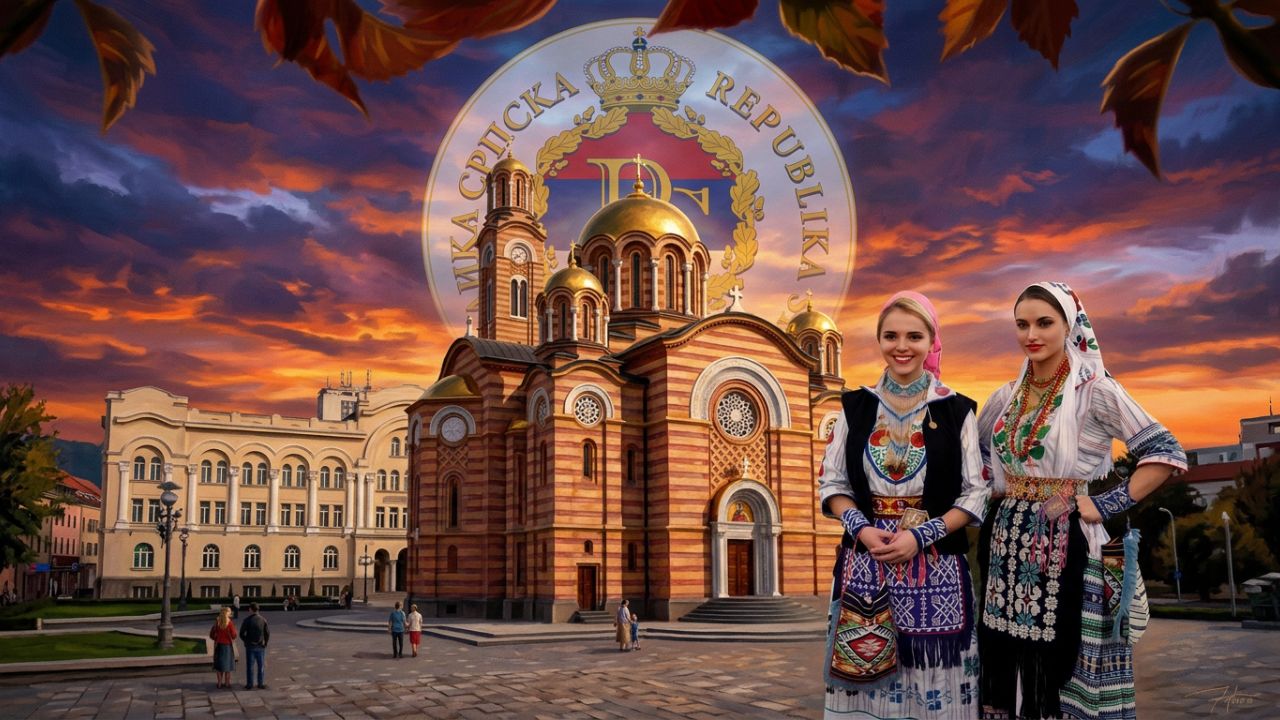
Whether you are a seasoned traveler searching for Europe’s last undiscovered corners or a first-time visitor drawn by stories of ancient bridges and primeval forests, Republika Srpska invites you to experience a land where tradition, nature, and warm hospitality converge. This guide is your comprehensive companion for 2026, covering everything from thermal spas and Olympic ski slopes to medieval monasteries, world-class rafting, award-winning wineries, and an emerging medical tourism sector. Inside you will find verified contact details, current pricing, insider tips, and practical information across 11 tourism categories, so you can plan your journey with confidence and make the most of every destination.
Dobrodošli / Welcome!
Welcome
Republika Srpska offers one of Europe’s most underrated tourism portfolios, spanning Olympic ski slopes, UNESCO World Heritage sites, 200+ thermal springs, Europe’s deepest canyon, and a burgeoning wine region just 30km from Dubrovnik. The entity recorded 477,944 tourist arrivals and 1.125 million overnight stays in the first 11 months of 2025, both record-breaking figures, with 57% of overnights from international visitors.
A new Central Tourism Registration System launched January 1, 2026, signals the government’s commitment to professionalize the sector. The Republika Srpska Tourism Strategy through 2027 positions the entity as “the most desirable tourist destination of the Western Balkans for active vacations and authentic experiences.”
The official tourism organization, Turistička organizacija Republike Srpske (TORS), coordinates promotion through multiple portals: www.turizamrs.org, www.visitsrpska.org, and www.visitformore.com. TORS is headquartered at Bana Milosavljevića 8, 78000 Banja Luka (phone: +387 51 229 720, email:
CLICK HERE IF YOUR ARE LOOKING FOR A DENTIST WHILE YOU ARE IN BANJALUKA
1. Thermal spas draw visitors to nine operational resorts
Republika Srpska possesses over 200 geothermal and mineral springs and approximately 15 spa centers, organized under the Group of Spas of RS within the Chamber of Commerce (www.spasrpska.com,
Banja Vrućica (Teslić) – The flagship
The largest spa complex in Bosnia and Herzegovina covers 75 hectares with four hotels offering roughly 1,000 beds. Over 100 years of tradition, Banja Vrućica specializes in cardiovascular and rheumatic rehabilitation using thermo-mineral carbonated water at 32-38.5°C with high CO2 content. The complex recorded 97,000+ overnight stays in just five months recently, with 60% foreign guests.
Hotels: Kardial (4-star, 337 beds, congress hall for 450), Posavina (238 beds), Hercegovina (155 beds, special hospital status), Srbija (165 beds) New for 2025-2026: Hercegovina Block B opened with MRI, CT scanner, and two operating rooms Wellness Center “Stara Banja”: 1,600 m² with indoor/outdoor pools, saunas, massages Prices: B&B 70-90 KM/night (€35-46); medical program with full board and 3 daily therapies: 49-67 KM/day (€25-34) Website: www.banja-vrucica.com/en/home/ | Instagram: @ztcbanjavrucica
Terme Laktaši
Known since Roman times, located 20km from Banja Luka and just 5km from the international airport. Calcium-magnesium-bicarbonate water at 30-40°C treats cardiovascular and musculoskeletal conditions. Hotel San (4-star, ~150 beds) features a wellness oasis with Finnish, infrared, and salt saunas, hydromassage pools, and chromo-therapy. Indoor pool year-round, outdoor complex in summer.
Address: Karadordeva 44, 78250 Laktaši Website: www.termelaktasi.ba | Email:
Banja Dvorovi (Bijeljina)
Discovered in 1956 during oil drilling — hot water at 75°C flowed instead of oil. Located in the Semberija plain near the Serbian border. Hotel Sveti Stefan offers 103 beds, and the sport-recreation center features 5 pools (including Olympic-sized) with capacity for 3,000 daily visitors. Treats rheumatism, gastritis, skin conditions, and neurological problems.
Address: Karadordeva 100, 76311 Dvorovi (6 km from Bijeljina) Website: www.banja-dvorovi.com | Email:
Banja Mlječanica (Kozarska Dubica)
A special hospital for physical medicine known for unique sulfide mineral water (first documented by Austrian chemist E. Ludwig in 1888). Treats stroke rehabilitation, psoriasis, eczema, rheumatic diseases, and osteoporosis. Total capacity ~183 beds across hospital building, rehabilitation unit, and bungalows. A 32 million KM capital investment has been announced for expansion.
Address: 79247 Meduvode, Kozarska Dubica (80 km from Banja Luka) Website: www.spamljecanica.com/en/ | Email:
Terme Ozren (Petrovo) – The newest complex
A recently built modern complex by concessionaire “Milojevic Gilje-Gas” with 11 indoor and outdoor pools (29-36°C), water slides, two restaurants, a full wellness center (steam bath, Finnish sauna, salt room), and modern hotel rooms. Located 25km from Doboj near the historic Ozren Monastery.
Website: www.termoezren.com/en/home/ | Email:
Banja Kulaši (Prnjavor)
One of only 7 spas in the world with hyperalkaline water (pH 12.75). Treats degenerative skin diseases, psoriasis, eczema, and inflammatory bone/joint conditions. Reconstructed in 2015 into a modern complex with Finnish sauna, steam bath, semi-open pool, and restaurant (104 seats). Rating: Booking.com 8.5.
Website: www.banjakulasi.com | Location: 14 km from Prnjavor, ~60km from Banja Luka
Banja Slatina (near Banja Luka)
Part of the Institute “Dr. Miroslav Zotovic.” Calcium-magnesium-sulfate thermal water at 40-42°C with healing mud. Accommodates up to 500 guests across 4 buildings (330 beds). A major government investment recently created a new spa-recreational facility – Terme Banja Luka – praised as “a new oasis of health.”
Prices: Specialist examination ~50KM; packages from 70KM/day | https://www.zotovicbl.com/index.php
Banja Guber (Srebrenica)
Historically legendary with 48 springs (16 scientifically confirmed), including “Crni Guber” once declared one of Europe’s best iron-arsenic springs. Currently not operational as a spa resort since the 1990s war, though springs remain accessible as an excursion site. Visit as a day trip only. https://sr.wikipedia.org/wiki/%D0%91%D0%B0%D1%9A%D0%B0_%D0%93%D1%83%D0%B1%D0%B5%D1%80
2. Olympic slopes and pristine peaks define mountain tourism
Jahorina Mountain is Southeast Europe’s premier ski resort
Host of the 1984 Sarajevo Winter Olympics (women’s alpine events), Jahorina is the largest ski resort in BiH with ~45km of alpine slopes plus 10km of nordic trails, 18 lifts including a Pininfarina-designed Poljice gondola, and snowmaking covering all runs. Night skiing is available on the Poljice slope. Average snow coverage lasts 175 days per year.
2025/2026 Season: December 5, 2025 – March 15/April 6, 2026 Ski pass prices: Full day adult 73-86 KM (37-44€) depending on season; children 53-73 KM; season pass 1,500 KM adults Summer offerings: Alpine coaster, 100+ km hiking trails, mountain biking, paragliding, ATV tours, zip-line Accommodation: Termag Hotel (4-star, ski-in/ski-out, €147-275/night), Hotel Vučko 4* Hotel Lavina, Hotel Board, plus numerous apartments (avg. ~$157/night weekends) Website: www.oc-jahorina.com/en/ | Email:
Ravna Planina (Pale)
One of BiH’s most modern ski centers, operational since 2014/15, with 12.5 km of slopes across 26 runs (17 easy, 5 intermediate, 4 advanced) and a FIS-homologated main run. Features a gondola, day and night skiing, Dino Park, adventure park, zip-line, and via ferrata. Located just 2km from Pale and 20km from Sarajevo.
Website: www.ski-rp.com/en/ | Email:
Kozara Mountain: The “Green Beauty of Krajina”
National Park (est. 1967, 3,494 ha) with family-friendly skiing on 3 slopes, WWII memorial complex at Mrakovica, and year-round activities. Daily ski passes are just 23 KM adults (~€12). Summer brings 6 hiking trails, 4 MTB trails, 30+ rock climbing routes, and a 16,000 ha hunting reserve.
Ski center: www.kozaraski.com | NP website: npkozara.com Accommodation: Hotel Monument (Mrakovica), Bijele Vode Guesthouse
Maglic Mountain (2,386 m) is The highest peak
Located on the BiH-Montenegro border within Sutjeska National Park, Maglic is the highest mountain in both Republika Srpska and all of Bosnia and Herzegovina. The summit ridge straddles the international boundary, with the neighboring peak Veliki Vitao (2,396 m) lying on the Montenegro side. Maglic offers a via ferrata route from Prijevor (2 km, 687 m elevation gain, 1.5-3 hours). Guided day trips from Foca/Sarajevo range from €70-130/person. The heart-shaped Trnovacko Lake at 1,517 m is a spectacular reward on the descent.
https://campsutjeska.com/maglic-mountain-tour/
Vidovdanski uspon na Maglic
Each year around St. Vitus Day (Vidovdan, June 28), the Planinarski savez Republike Srpske (Mountaineering Association of RS) organizes a traditional mass ascent of Maglic. This multi-day event draws mountaineers from across the region to base camp at Prijevor, with the main ascent following the Postarev smjer (Postare’s route). The program includes an astronomy evening, talks by distinguished climbers — including Petar Pecanac, the first alpinist from RS to summit Everest — and an awards ceremony. The 2024 edition ran June 28-29. The Vidovdanski uspon has become one of the most significant annual mountaineering traditions in the Western Balkans.
Zelengora Mountain is “Green Mountain”
A wild mountain range within Sutjeska NP featuring 8 glacial lakes (“Mountain Eyes”), the highest being Bregoč at 2,014 m. Largely untouched by mass tourism, perfect for hiking, camping, fishing, and photography. Three-day guided tours from ~€295/person through operators like Adventure BiH (www.adventurebih.com +387 65 946 072).
3. UNESCO heritage and medieval monasteries anchor cultural tourism
Višegrad: Where Ottoman architecture meets Nobel literature
The Mehmed Paša Sokolović Bridge (UNESCO World Heritage since 2007) spans the Drina River with 11 masonry arches over 179.5 m. Commissioned by Grand Vizier Sokolović and designed by Mimar Sinan (1571-1577), this is one of only three bridges on the UNESCO list. Free to walk, accessible 24/7. Immortalized in Ivo Andrić’s Nobel Prize-winning novel “The Bridge on the Drina.”
Adjacent to the bridge, Andrićgrad — conceived by filmmaker Emir Kusturica — is a stone-built cultural complex mixing Byzantine, Ottoman, Renaissance, and Classicist styles across ~50 buildings. It houses restaurants, a cinema, gallery, Andrić Institute, and the Church of St. Emperor Lazar. Višegrad receives approximately 300,000 tourists annually.
Tourist Organization Višegrad: www.visegradturizam.com | +387 58 620 821 |
Banja Luka: Kastel Fortress and Ferhadija Mosque
Kastel Fortress covers 48,000 m² on the Vrbas River, with evidence of habitation since Neolithic times. Walls are 2.5 m thick with 7 cannon fortifications. Declared a National Monument, it hosts summer festivals (Demofest, Fresh Wave) and contains Restaurant Kazamat and Gallery “Kamera Kuća.” Free entry.
The Ferhadija Mosque (1579) is one of the finest Ottoman mosques in the Balkans. It was meticulously reconstructed using ~50% original materials, reopening May 7, 2016. Its 43m minaret dominates the skyline. Other landmarks include the Cathedral of Christ the Saviour (Serbian-Byzantine style), Banski Dvor Cultural Center, and the Museum of Republika Srpska.
Trebinje: Mediterranean charm at BiH’s southern tip
The walled Old Town (Stari Grad) was developed by Ottomans in the 18th century, with stone streets, mosques, cafes, and a Mediterranean atmosphere often compared to southern France, just 30km from Dubrovnik. The Arslanagic Bridge (1574, 92m, National Monument) was relocated stone-by-stone in the 1960s to save it from flooding. On Crkvina Hill above the city, Hercegovačka Gračanica, a 2000-built replica of Kosovo’s Gračanica Monastery, offers panoramic views and houses the grave of poet Jovan Dučić.
Herzegovina Museum: Mon-Fri 08:00-20:00, Sat-Sun 10:00-20:00 | www.muzejhercegovine.org Tourist Organization: gotrebinje.com | www.visit-trebinje.com
4. Three national parks and Europe’s deepest canyon shape nature tourism
Sutjeska National Park, BiH’s crown jewel
The country’s oldest (1962) and largest national park covers 16,052 hectares and contains the Perućica Primeval Forest is one of Europe’s last two primeval forests (1,434 ha, trees up to 300 years old). The 75m Skakavac Waterfall hides deep within. Maglic peak and 8 glacial lakes on Zelengora complement the WWII Tjentiste Memorial Complex. Brown bears, wolves, chamois, and golden eagles inhabit the park.
Address: JU Nacionalni Park “Sutjeska”, 73311 Tjentiste | Website: www.sutjeskanp.com New for 2025-2026: Truck safari in Zelengora to Vučije Stijene viewpoint; plans for transboundary protected area with Montenegro’s Durmitor
National Park Drina is The youngest park
Established 2017, covering 6,315 hectares along the Drina’s left bank in Srebrenica municipality, opposite Serbia’s Tara National Park. Home to the endemic Pančić’s Spruce (Picea omorika), a tertiary relic species. The Drina Canyon reaches 976m depth at Crni Potok. Boat rides on Perućac Lake (54km long) pass through dramatic wilderness with no roads or settlements.
Phone: +387 56 471 021 | Email:
Rivers: From world championship rapids to karst mysteries
The Vrbas River Canyon extends ~30km south of Banja Luka with turquoise water and cliffs up to 300m. It hosted the 2009 and 2024 World Rafting Championships. The Krupa na Vrbasu waterfalls feature traditional active watermills and nearby medieval fortress Greben (1192).
The Drina River (346 km) forms much of the BiH-Serbia border and includes the UNESCO bridge at Višegrad. The Tara River Canyon is Europe’s deepest at 1,300m and 78km long and is a UNESCO-recognized natural wonder accessible from Foča.
The Trebišnjica was once Europe’s longest sinking river (187 km total, partly underground). Crystal-clear water flows through Trebinje, offering boat cruises, kayaking past 5 historic bridges, and encounters with endemic species including the olm (“human fish”) in underground streams.
Bieleko Jezero is The “Herzegovinian Sea”
The Balkans’ largest artificial reservoir (~33km², up to 104m deep) was created by Grančarevo Dam (124m, BiH’s highest). Trophy catfish exceeding 2m and 100kg have been caught here. Underwater archaeological sites (submerged Roman-era Panik), relocated medieval monasteries, and the Crvena Stijena cave (human traces dating 180,000 years) surround the lake.
Orlovača Cave is RS’s premier cave attraction
BiH’s second-longest cave (2.5+km explored, 560m tourist-accessible) near Pale features extraordinary formations, cave bear bones 16,000+ years old, and Mesolithic pottery. Open April 15 – October 15, tours Tue-Sat at 9:00, 12:00, 15:00. Adults 4KM, children (groups) 2KM. Contact: Tourist Organization Pale (www.toopale.com).
Bardača Wetlands (Ramsar Site)
Designated Ramsar Site (Bardača) in 2007, covering 3,500 hectares with historically 185-200 bird species. However, severe degradation since 2010 has drained most of its 11 original lakes, only 3 retain water. Restoration advocacy ongoing; set realistic expectations when visiting.
5. World-class rafting anchors a growing adventure sector
Vrbas River rafting: Championship waters through Banja Luka
The 31km route from Bočac Dam to Banja Luka city center passes through two canyons with Grade III-IV rapids. Night rafting is one of few illuminated routes globally and is a unique offering. Water temperature reaches 17-23°C in summer.
Funky Tours: www.funkytours.com |
Vrbas Rafting D.o.o.: Instagram @vrbas.rafting | +387 65 614 592
Rafting Centar Kanjon: Available via www.Peek.com | All equipment and Banja Luka pickups included
Season: May-October
Tara River Canyon rafting is Europe’s deepest gorge
The standard one-day route runs 18-22 km from Brstanovica to Šćepan Polje, featuring 22-23 rapids (Grade III-V). Crystal-clear, drinkable water at ~12°C year-round. No prior experience needed.
Rafting Centar Drina-Tara (largest center, 450+ beds): raftingtara.com |
TaraSport: www.tarasportrafting.com |
Outdoor Tara (Tjentiste, Sutjeska NP): www.outdoortara.com |
Multi-day adventure packages €70-312. Small group tours with GoPro footage included. Top-quality Yamamoto neoprene wetsuits and specialized canyoning boots provided
Adventure BiH: www.adventurebi.com | +387 65 946 072 | From €50/person including GoPro footage
Rafting Camp Highlander: Located near Tjentiste, offering camp accommodation and Tara rafting packages
Drina River rafting from Foča
The 26 km route includes BBQ lunch on a riverside beach. Rafting Camp Divlja Rijeka (divljarijeka.com) and Camp DMD (www.tara-rafting.com) operate from the Foča area.
Beyond rafting: A full adventure menu
Paragliding is available at Mount Ozren (Doboj), Gljiva (Trebinje), and Balkana Mountain (Mrkonjić Grad). The Doboj-based ParaGhost Club offers tandem flights requiring no experience. Cycling encompasses 1,443+ mapped routes, with Vrbas Adventure Resort offering 102 km of mountain biking trails.
Zip-lines operate over the Tara River through TaraSport and Adventure BiH. Rock climbing includes 100+ bolted routes at Tijesno on the Vrbas and 30 routes at Kozara’s Zečiji Kamen. Canyoning in Hrčavka Canyon near Foča is increasingly popular, Outdoor Tara (www.outdoortara.com) is the leading specialist operator, with dedicated canyoning equipment and experienced guides. The traditional dajak boat rides on the Vrbas, flat-bottomed punts unique to Banja Luka, offer a cultural-adventure hybrid experience.
6. Ethno villages preserve traditions while wineries win international medals
Etno Selo Stanišići is The Balkans’ largest ethno village
Founded in 2003, spanning 15 hectares with ~20 authentic relocated wooden log cabins, this Bijeljina landmark attracts visitors from across the region. Two sections — a secular village depicting 19th-century Serbian rural life (watermills, smithy, dairy) and a spiritual quarter with stone medieval architecture replicas. Hotels Pirg and Ras (5-star, ~300 beds), the Leonida Wellness Center (3,500m² with pool, multiple saunas, Turkish bath, gym), 3 restaurants, and conference facilities for up to 1,000 make this a full-service destination.
Address: Pavlovića put 32, 76300 Bijeljina (~140 km from Belgrade) Website: www.etno-selo.com | Email:
Other ethno destinations
Kraljevsko Selo Kotromanićevo (20 km from Doboj) offers a medieval Bosnian royal theme with knight tournaments, themed dinners, and log cabin accommodation. Contact: kotromanicevo.com, +387 53 207 010. Etno Selo Balkis near Gradiška (balkis.info) sits at the foot of Kozara with bungalows, an artificial fishing lake, and camping. Zelenkovac near Mrkonjić Grad is an ecocultural mountain retreat founded by artist Borislav Janković, famous for jazz festivals and art colonies.
RS has 257 registered rural households providing hospitality, with 95% of territory being rural. The EU-backed “Smart Era” project in eastern Herzegovina is modernizing rural tourism through technology.
Herzegovina’s wine route earns international recognition
The Herzegovina Wine Route (www.hwr.ba), a certified Cultural Route of the Council of Europe (“Iter Vitis”), connects ~30 wineries across 6 municipalities including Trebinje. Autochthonous grapes Žilavka (white) and Vranac (red) star alongside international varieties. Mostar was named European Wine City Dionisio 2024.
Tvrdo Monastery Winery is the most compelling wine-tourism site in Herzegovina that operates from a 15th-century monastery 5 km from Trebinje. Monks tend 130 hectares of vineyards and produce Decanter Award-winning wines in three cellars, including the original 15th-century cellar with century-old oak barrels. Tours include viewing 4th-century foundations through glass floors. Phone: +387 59 246 810, www.tvrdos.com.
Vukoje Winery (Podrumi Vukoje 1982) has won “best winery in Southeast Europe” and earned 150+ gold medals internationally. The multi-story facility above Trebinje includes a restaurant seating 300 with panoramic views and underground cellars 8m deep. Over 50,000 visitors in recent seasons. Website: www.podrumivukoje1982.com.
Trebinje’s traditional gastronomy complements the wine: lamb under sae (bell dome), Herzegovina’s pruet, cheeses in olive oil, and honey. The famous Trappist cheese from Mariastern Abbey near Banja Luka follows a secret monastic recipe. Banja Luka’s signature cevapi are distinct from Sarajevo’s version. Rakija (brandy), especially sljivovica (plum), currently nominated for UNESCO Intangible Heritage status, is integral to hospitality at virtually every rural household.
7. Major monasteries form a pilgrimage network across the entity
Republika Srpska’s Serbian Orthodox monasteries constitute one of its most distinctive tourism assets, with many dating to the medieval Nemanjic dynasty.
Tvrdo Monastery (Trebinje), Seat of the Eparchy of Zahumlje-Herzegovina, built c.1509 on 4th-century foundations. Saint Vasilije of Ostrog was tonsured here. Famous wine cellars (see above). Open 07:00-19:00. Phone: +387 59 246 810.
Dobrun Monastery (near Visegrad), Built 1343 by Duke Pribil, with remarkable 14th-century frescoes depicting Tsar Dusan. Contains a Museum of the First Serbian Uprising and Painting Gallery. Located 12 km from Visegrad in the Rzav valley. Contact through TO Visegrad: +387 58 620 821.
Gomionica Monastery (42 km west of Banja Luka) — 16th-century female monastery, National Monument, with treasury containing icons from the 16th-19th centuries and manuscripts from the 14th century. A woodcarved cross from 1640 now resides at the Courtauld Institute in London. Website: www.turizamrs.org/en/manastir-gomionica/.
Ozren Monastery (Petrovo), National Monument dedicated to Saint Nicholas, probably founded in the 16th century under Patriarch Makarije Sokolovic. Contains a notable 17th-century Pieta by Emmanuel Lambardos (Cretan School).
Krupa na Vrbasu Monastery (~25 km south of Banja Luka), Church/monastery built on remains of a 6th-century basilica, potentially the oldest Christian church in the area. Contains relics of St. Matrona of Moscow. Nearby: stecici tombstones (UNESCO) and fortress Greben (1192). Phone: +387 51 417 091.
Liplje Monastery (25 km west of Teslic), 14th-century Raška school architecture with connections to Stefan Nemanja and Saint Sava. Zavala Monastery in Popovo Polje features 17th-century frescoes by Gregorije Mitrofanović considered the finest medieval frescoes in BiH. Tavna Monastery (25 km from Bijeljina) dates to before 1533. Moštanica Monastery (12 km north of Kozarska Dubica) is among RS’s largest. Lomnica Monastery (near Šekovići) houses exceptionally precious 16th-century frescoes.
8. Festivals from Kastel Fortress to Sutjeska’s primeval forest
Music festivals
Nektar Fresh Wave Festival (Banja Luka), BiH’s most important electronic music festival at Kastel Fortress. 13th edition confirmed August 7-9, 2025. Tickets 60-90 BAM. Website: www.freshwavefestival.com.
Demofest (Banja Luka), Southeastern Europe’s largest festival of unsigned bands, recognized by UNESCO. Free admission at Kastel Fortress. Historically mid-July. Past headliners: Guano Apes, Mando Diao, Stereo MCs. Website: www.demofest.ba.
OK Fest (Tjentiste, Sutjeska NP) — A uniquely located festival in Europe’s primeval forest, combining music across three stages with hiking and rafting. 12th edition: July 17-19, 2025. Website: www.okfest.net.
Banja Luka Fest — Has hosted Goran Bregović, Zdravko Čolić, Josipa Lisac. Website: www.banjalukafest.com, +387 65 077 888.
Film and theatre
The Festival of Mediterranean and European Film (Trebinje) screens 35-40 films from 15-20 countries annually. 13th edition ran July 27-August 2, 2025. The Teatar Fest “Petar Kočić” (Banja Luka) is one of the region’s most significant theatre festivals, now in its 27th year (June, National Theatre). The International Festival of Children’s Theatres (Banja Luka, October) features a puppet museum with ~500 puppets is the only such museum in Southeast Europe.
Sports events, outdoor traditions, and conferences
Vidovdanski uspon na Maglic (late June, Sutjeska NP), One of the Western Balkans’ most significant annual mountaineering events, organized by the Planinarski savez Republike Srpske around St. Vitus Day (Vidovdan, June 28). The multi-day program includes a mass ascent of BiH’s highest peak from base camp at Prijevor, astronomy evenings, talks by distinguished mountaineers, and an awards ceremony. Open to all fitness levels with guided groups. See Section 2 (Maglic) for details. https://www.adventurebih.com/tour/maglic-mountain-tour/?srsltid=AfmBOoqm-st9QTJBk0rB6EBv1msyiSc5s2cltwnWc7OpWXgeR-fHDwgQ
Jahorina Ultra Trail (www.jahorinatrail.com), Kozara Marathon/Ultra Trail, “Summer on the Vrbas” (traditional 15-day event since 1953 with dajak boat races and bridge jumping), Motofest Banja Luka (20,000+ participants, late May), and the Jahorina Economic Forum (May, Hotel Termag) anchor the sports and business events calendar. INFOTEH-JAHORINA 2026 (March 18-20) brings its 25th international technology symposium. The B-HARD Ultra Race is scheduled for June 12, 2026 in Banja Luka.
9. Six cities offer distinct urban tourism experiences
Banja Luka is The vibrant capital
BiH’s second-largest city (~185,000 population) anchors RS tourism with Kastel Fortress, Ferhadija Mosque, Cathedral of Christ the Saviour, the lively Gospodska Street pedestrian zone, and the Vrbas River running through its center. Banj Hill (431 m) offers panoramic views. The Museum of Modern Art occupies a former Austro-Hungarian railway station (1891, national monument) with 1,300+ works. Nightlife rates 7/10 with bars and clubs along Gospodska.
Airport: Banja Luka International (25 km north; Ryanair, WizzAir, Air Serbia) Tourism: www.banjaluka.travel/eng/ | www.banjalukaevents.com
Trebinje is Herzegovina’s hidden gem
With 260 sunny days/year and Mediterranean climate, Trebinje is increasingly popular as a Dubrovnik alternative. The 22 wineries, historic Old Town, Tvrdoš Monastery, and riverside promenades create a complete experience. Grad Sunca (City of the Sun) aqua and dino park covers 800,000 m² on the western outskirts.
Key restaurants: Porto Galo (+387 66 851 493), Platani (+387 59 274 050), Studenac (+387 59 482 627), Dučicev Pogled (+387 66 314 137) Getting there: 30 km from Dubrovnik, 120 km from Mostar
Bijeljina is The gateway from Serbia
Located 134 km from Belgrade (1h45min drive), Bijeljina’s main draws are Etno Selo Stanišići and Banja Dvorovi (120,000+ annual visitors). The Atik Mosque (1520s, rebuilt) and King Peter I Square anchor the city center. The fertile Semberija region produces excellent fresh produce.
Doboj is Medieval fortress and railway hub
BiH’s largest railway hub features a 13th-century fortress (survived 18+ ransackings) with amphitheatre, ethno cafe, and knight battle reenactments. Goransko Lake (8.7 km away) offers swimming and camping. Nearby Mount Ozren provides ~50 km of roads for cycling and hiking plus the ancient Ozren Monastery. FESTTOUR International Tourism Festival runs in June at the fortress.
Website: www.turizamrs.org/en/doboj/ | www.visitsrpska.org/en/doboj/
East Sarajevo / Pale is Olympic gateway
The municipalities of Pale and Sokolac serve as the gateway to Jahorina (28 km from Sarajevo) and Ravna Planina (2 km from Pale). Romanija Mountain offers steep cliffs for mountaineering and paragliding. Orlovača Cave is 10km from Pale. The area has official air spa status due to exceptional air quality.
10. Medical tourism finds its strategic moment
Health and medical tourism in Republika Srpska is at a strategic inflection point. The “Booking Health in Srpska” conference series – launched February 2025 in Banja Luka and expanding to Vienna’s Albert Hall on February 24, 2026 – represents the first organized, government-backed effort to position RS as a medical tourism destination. The 2nd Banja Luka conference follows March 24-25, 2026 at Hotel Courtyard by Marriott. Website: www.bookinghealthinsrpska.com.
Dental tourism is the most developed segment, with multiple Banja Luka clinics offering packages 50-70% below Western European prices:
- UNDENT: www.unidentstomatologija.com |
This email address is being protected from spambots. You need JavaScript enabled to view it. | +387 66 840 777 | Online consultations, airport transfers, accommodation booking - Kovačević Dental: www.stomatologijakovacevic.com | English, German, Slovenian, Bosnian languages | Claims prices “up to 10x lower than European average”
- Dental Tourist (aggregator platform): www.dentaltourist.eu | Partners with specialized clinics, arranges transport and accommodation
- Dr Macura Dental: www.macuradent.com | Established 2010, aesthetic prosthetics specialty
Ophthalmology stands out with two established eye hospitals. Special Eye Hospital “Dr. Kozomara” (www.bolnica-drkozomara.com) performed BiH’s first laser vision correction in 2008. Special Eye Hospital Svjetlost Banja Luka (branch of Zagreb’s prestigious network) uses 3 latest-generation lasers and carries a 100% patient recommendation rate on PlacidWay.
11. What distinguishes Republika Srpska’s tourism future
Several developments position Republike Srpska tourism for meaningful growth through 2026 and beyond. The entity’s price competitiveness remains exceptional: full medical spa programs cost €25-34/day with meals and therapies; Tara Canyon rafting starts at €50; Kozara ski passes cost just €12/day. The 32 million KM investment in Banja Mljecanica, the new Terme Ozren aquapark, and the Hercegovina Block B medical facility at Banja Vrućica signal infrastructure modernization.
The Herzegovina Wine Route’s Council of Europe certification and the dental tourism sector’s organized Vienna marketing push suggest a maturing approach to international positioning. Meanwhile, the entity’s core assets, Tara Canyon’s status as Europe’s deepest gorge, Sutjeska’s primeval forest, Jahorina’s Olympic pedigree, and the UNESCO bridge at Višegrad, remain substantially less crowded than comparable attractions elsewhere in Europe. Trebinje’s proximity to Dubrovnik (30 km) makes it an increasingly compelling alternative or complement to Croatia’s overcrowded coast.
The key challenge remains infrastructure and marketing cohesion. Banja Guber’s legendary healing waters remain undeveloped. Bardaca Wetlands face ecological degradation. Some monastery and cave sites lack published visiting hours or digital presence. But for travelers willing to navigate these gaps, Republika Srpska in 2026 offers authentic experiences, natural grandeur, and extraordinary value that few European destinations can match.
Essential contacts at a glance
- TORS (central tourism authority): www.turizamrs.org / www.visitsrpska.org | +387 51 229 720 |
This email address is being protected from spambots. You need JavaScript enabled to view it. - TO Banja Luka: www.banjaluka.travel/eng/
- TO Trebinje: www.gotrebinje.com
- TO Višegrad: www.visegradturizam.com | +387 58 620 821 |
This email address is being protected from spambots. You need JavaScript enabled to view it. - TO Pale: www.toopale.com
- OC Jahorina: www.oc-jahorina.com | +387 57 270 090 |
This email address is being protected from spambots. You need JavaScript enabled to view it. - Herzegovina Wine Route: www.hwr.ba
- Spa Group (Chamber of Commerce): www.spa-srpska.com | +387 51 493 133 |
This email address is being protected from spambots. You need JavaScript enabled to view it. - NP Sutjeska: www.sutjeskanp.com
- NP Drina: www.npdrina.com | +387 56 471 021 |
This email address is being protected from spambots. You need JavaScript enabled to view it. - Booking Health in Srpska: www.bookinghealthinsrpska.com
- Outdoor Tara (adventure operator): www.outdoortara.com | +387 66 834 105 |
This email address is being protected from spambots. You need JavaScript enabled to view it.
A Land That Stays With You
Beyond the statistics and contact details lies something no guide can fully capture, the spirit of Republika Srpska. It is the monastery keeper who opens the gate after hours just to show you a 14th-century fresco by candlelight. It is the rafting guide on the Tara who stops mid-rapid to point out a golden eagle circling above the canyon. It is the winemaker in Trebinje who insists you stay for one more glass of Vranac as the sun sets over the vineyards, and the mountain hut host on Zelengora who sends you off with homemade cheese and a hand-drawn trail map.
This is a place where nature has been generous, primeval forests older than most European nations, thermal waters that have healed travelers for centuries, and mountains that reward every step with views that make you pause and simply breathe. But what transforms a visit into a lasting memory is the people. In Republika Srpska, hospitality is not a service, it is a way of life, passed down through generations alongside recipes for rakija and lamb under the sač.
Whether you come for a weekend on the slopes of Jahorina, a week exploring the monasteries and wine cellars of Herzegovina, or a single afternoon wandering the stone streets of Trebinje, you will leave with stories worth telling and a quiet certainty that you will return.
The doors are open. The coffee is on. Republika Srpska is waiting for you.
Dobrodosli, welcome, and see you soon.