
You’ve built a sleek website for your business. Visitors are pouring in. You run analytics, display ads, use third-party tracking for retargeting. All seems well, until you receive an email: the regulator in a major EU country has opened an inquiry because your site uses tracking cookies without proper consent. The fine? Tens of thousands of dollars. The brand damage? Significant.
In today’s digital economy, the humble “cookie” file is much more than a technical convenience, it’s a regulatory touchpoint, a trust signal and a business risk. Whether you are based in the U.S., EU or serve global customers, implementing a cookie-consent mechanism is no longer optional. This post explains what cookie consent is, why you need it (especially in the U.S. and EU), what you gain by having it, what you risk without it, and how you can launch a powerful free solution now.
What is cookie consent?
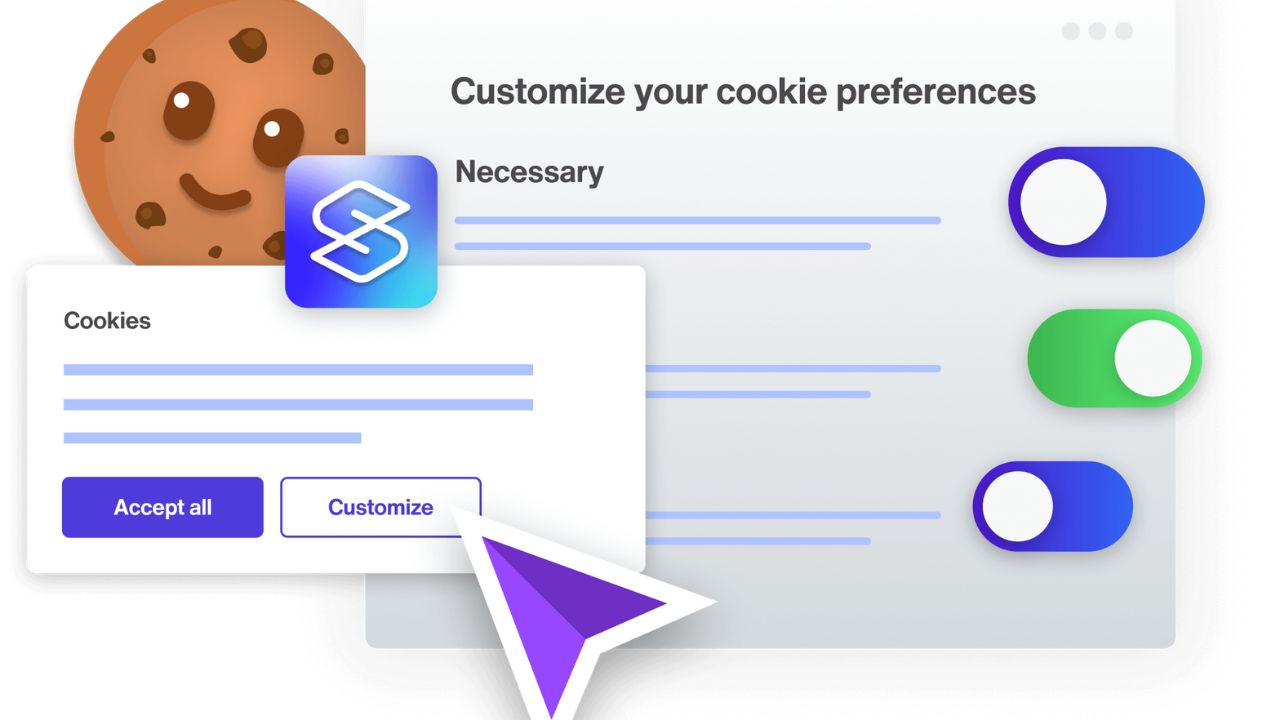
“Cookies” are small data files placed by a website on a visitor’s device, enabling recognition, tracking or personalization. A cookie-consent solution is a mechanism (banner/popup + preferences center) that performs three key functions:
- Informing the user which cookies and trackers your site uses (and by whom).
- Obtaining user permission (or letting them refuse) for non-essential cookies/tracking.
- Blocking or activating cookies in accordance with the user’s preferences.
In regulatory parlance, cookies that do more than strictly necessary for site operation are typically treated as personal-data processing (or access to stored information) and require valid consent, i.e., freely given, informed, specific and unambiguous. That makes a good consent mechanism a foundational privacy control.
Why you need it in U.S., EU and beyond
European Union / EEA
If you attract visitors from the EU/EEA, even if your business is based elsewhere, two core legal regimes apply:
- The ePrivacy Directive (a.k.a. the “cookie law”) requires that storing or accessing data on a user’s device (e.g., cookies) is permitted only if users have been given clear information and provide consent, unless the cookie is strictly necessary for the service.
- The General Data Protection Regulation (GDPR) treats cookies that process personal data as data-processing activities and mandates a lawful basis for processing, consent being one option, but if used it must meet high standards (informed, specific, revocable).
In short: EU users = consent required for non-essential cookies; you cannot treat it as optional or assume implied consent.
United States & other jurisdictions
While the U.S. lacks a unified federal “cookie law” akin to the GDPR, several states (e.g., California under the California Consumer Privacy Act / CPRA) regulate personal data, require notice and opt-outs, and forthcoming laws may impose more explicit consent requirements.
Even if you believe you only serve U.S. users, if you receive traffic from the EU (or intend to) you should treat EU-style rules as relevant. Many regulators take the view that targeting EU residents brings you under EU jurisdiction.
Key takeaway: If your website has a global footprint (or even just serves EU/EEA users), cookie-consent is not optional, it’s foundational.
Benefits of having a strong cookie-consent system
1. Legal and regulatory compliance
By providing an effective consent mechanism and tracking user preferences, you significantly reduce regulatory risk. In the EU, serious non-compliance under GDPR can lead to fines of up to 2-4 % of global annual turnover (or €20 million+, whichever is higher).
Being proactive positions you for future regulatory changes, rather than reacting with urgency (and cost).
2. Trust and transparency with users
More visitors are privacy-aware. When your site communicates clearly that you’re committed to their choices, you build credibility. A transparent banner that lets users accept or decline, see what’s tracked and why, boosts confidence, and can improve user engagement.
3. Better quality first-party data
When you implement a legitimate consent framework, the analytics and tracking data you collect are based on opt-in, which makes them more reliable. Trustworthy data means better insights, targeting and ROI. If you don’t have valid consent, you may rely on incomplete or ethically compromised data.
4. Operational advantages & future-proofing
- By integrating consent-management early, you create an audit-trail of what users agreed to and when (essential for regulatory inquiries).
- You avoid scrambling when new rules appear (as we’re seeing with Google’s Consent Mode v2, digital-markets legislation, etc.).
- A well-implemented banner reduces friction (cookie-popup fatigue) and supports smoother user experience.
Consequences of not having it
Legal & financial risk
Enforcement is increasing. For example, national regulators have fined large internet platforms hundreds of millions for inadequate cookie-consent practices.
Non-compliance can result in large fines, mandated remediation, and sustained reputational damage.
Loss of user trust & brand risk
A visitor who discovers they’re being tracked without informed choice may leave, reduce engagement, or convert less. For consumer brands especially, privacy missteps can erode trust quickly.
Poor data quality
If you rely on tracking without valid consent, your data may be incomplete or biased, undermining the validity of analytics, targeting and business decisions.
Competitive disadvantage
As more sites adopt strong consent frameworks and promote themselves as “privacy-conscious”, laggards may be perceived as outdated, risky or low-value – especially in privacy-sensitive markets.
Free tool you can download and install today
If you’re ready to implement a cookie-consent mechanism, one best-in-class free solution is Silktide Consent Manager.
- It’s 100 % free forever, open-source, with no traffic or domain limits. (Silktide)
- It supports Google Consent Mode v2 (important if you use Google Analytics or Ads) right out of the box. (Silktide)
- Fully customizable (colors, positions, text, cookie categories) and lightweight (minimal code impact). (Silktide)
- Installation is simple: choose your branding → select cookie categories (Necessary, Analytics, Advertising, custom) → copy-paste the script into your site/Google Tag Manager. (Silktide)
Quick setup checklist:
- Audit your site: list all cookies/trackers (especially third-party analytics, advertising, social-media embeds).
- Download/install Silktide Consent Manager: copy the script into
<head>or via Google Tag Manager. - Configure categories: ensure non-essential cookies (analytics, ads) are only enabled after explicit user consent.
- Provide “Accept All”, “Reject All” and “Manage Settings” controls; link to your cookie/privacy policy.
- Test: from EU/EEA location (or using a VPN), verify cookies don’t load until user consents; inspect console/network.
- Document: keep a log of your implementation, user-consent records (if you collect them) and your cookie-policy disclosure.
Final thoughts
In the digital era, cookie-consent is neither a trivial pop-up nor a legal afterthought, it is a strategic imperative. It addresses regulatory compliance, user trust, data integrity and business sustainability. Whether your website serves EU users, U.S. visitors, or a global audience, implementing a transparent and effective consent mechanism is a smart strategic move.
The cost? Minimal. The risk of inaction? Potentially massive. With tools like Silktide Consent Manager available for free, there’s no excuse to delay. Install today, reduce your compliance risk, earn user trust and build a data-foundation that’s both ethical and effective.
Take action now: Audit your cookies, implement a consent banner, and validate your setup before regulators or user questions catch you unprepared.